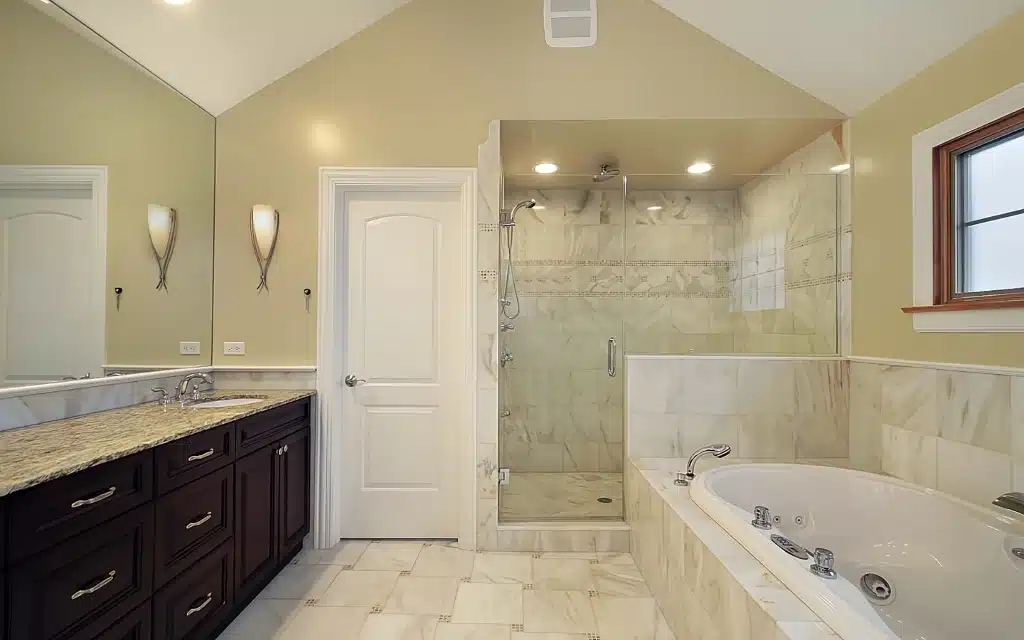
Whether you are updating a guest bathroom in your Plano home, transforming a master bath in Frisco, or converting a hall bath in McKinney, this step-by-step guide will walk you through everything you need to plan, decide, and prepare before your remodel starts.
Step 1: Define Your Scope
Cosmetic Refresh
A cosmetic refresh updates the visible surfaces without changing the layout or plumbing locations. This typically includes new paint, updated lighting, a new vanity or vanity top, a new mirror, and possibly new tile flooring. The plumbing fixtures stay in their current locations, and the overall footprint of the bathroom remains the same.
Best for: Bathrooms that are functional but visually dated. This is common in North Dallas homes built in the 1990s and 2000s where the layout works but the finishes feel tired.
Partial Remodel
A partial remodel changes some elements of the bathroom while keeping others. For example, you might replace the shower and vanity but keep the existing tub and toilet in their current locations. Or you might update all fixtures and surfaces but leave the layout unchanged.
Best for: Homeowners who want a significant upgrade without the cost and timeline of a full gut renovation.
Full Renovation
A full renovation involves stripping the bathroom down to the studs and rebuilding it from the ground up. This allows you to change the layout, relocate plumbing, add or remove walls, and create an entirely new design. Full renovations are the most comprehensive option and deliver the most dramatic results.
Best for: Master bathroom transformations, outdated bathrooms with layout problems, or any project where the existing space does not meet your needs.
Understanding which category your project falls into will help you set realistic expectations for budget, timeline, and disruption.
Step 2: Set Your Budget
How to Think About Budget
Rather than choosing an arbitrary number, consider these factors:
- How long do you plan to stay in the home? If you are remodeling for yourself and plan to stay for many years, investing in higher-quality materials makes sense. If you are preparing to sell within a year or two, focus on updates that appeal to the broadest range of buyers.
- What is the bathroom’s role? A master bathroom that you use every day warrants a different level of investment than a guest bathroom used a few times a month.
- What matters most to you? Identify your top two or three priorities. If a walk-in shower with premium tile is the most important element, allocate more of your budget there and find savings elsewhere.
Budget Categories to Account For
A complete bathroom remodel budget should include:
– Demolition and disposal
– Plumbing work (moving or adding supply lines and drains)
– Electrical work (lighting, outlets, ventilation fan)
– Waterproofing and moisture barriers
– Tile and installation
– Vanity, countertop, and sink
– Toilet
– Shower or tub fixtures
– Mirrors and accessories
– Lighting fixtures
– Paint
– Labor and project management
– Permit fees (if applicable)
– A contingency fund (typically 10 to 15 percent of the total budget for unexpected issues)
A free consultation with an experienced remodeling contractor is one of the best ways to understand what your goals will realistically require. A good contractor will help you identify where to invest and where to save.
Step 3: Make Key Design Decisions
With your scope and budget defined, it is time to make the design decisions that will shape your new bathroom.
Tub vs. Walk-In Shower
This is one of the biggest decisions in any bathroom remodel, and it deserves careful thought.
Keep or install a tub when:
– The bathroom is a family bathroom used to bathe young children
– You personally enjoy baths and use a tub regularly
– The home has only one bathroom with a tub (removing it could affect resale)
– You are updating a guest bathroom where a tub-shower combination is practical
Choose a walk-in shower when:
– You rarely or never use a tub
– You want a more spacious, open feel in the bathroom
– Accessibility and aging-in-place are considerations
– You are creating a spa-like master bathroom retreat
– The home has at least one other bathroom with a tub
In the North Dallas real estate market, most real estate professionals recommend keeping at least one bathtub in the home. If your master bathroom remodel removes a tub, ensure another bathroom still has one.
When to Choose Hardwood
>Tile Selection
Tile is the dominant material in most bathroom remodels, covering floors, shower walls, tub surrounds, and sometimes accent walls. Your tile choices set the tone for the entire room.
For floors: Porcelain tile is the gold standard for bathroom floors. It is water-resistant, durable, and available in an enormous range of styles. Larger-format tiles (12×24 or larger) create a clean, modern look and have fewer grout lines to maintain. Wood-look porcelain tile has become very popular for homeowners who want the warmth of wood in a moisture-prone room.
For shower walls: Porcelain or ceramic tile remains the most popular choice. Subway tile in a variety of sizes and finishes continues to be a versatile option. Natural stone tile (marble, travertine) delivers a luxurious look but requires more maintenance and sealing.
For accents:A decorative tile accent, such as a niche in the shower, a feature wall behind the vanity, or a border detail, adds visual interest without overwhelming the space.
>Vanity Selection
The vanity anchors the bathroom’s design and provides essential storage. Consider these factors:
- Single vs. double vanity. If space and plumbing allow, a double vanity in a master bathroom adds convenience and resale appeal. Standard double vanities range from 60 to 72 inches wide.
- Freestanding vs. built-in. Freestanding (furniture-style) vanities create a lighter, more open feel. Built-in vanities offer more storage and a seamless, custom look.
- Countertop material. Quartz is the most popular vanity countertop material in our market due to its durability and low maintenance. Marble is a classic choice for a more traditional or luxurious feel. Solid surface and cultured marble are budget-friendly options that perform well.
> Fixtures and Hardware
Bathroom fixtures and hardware tie the entire design together. Choose a consistent finish family throughout the room:
- Matte black is modern and makes a strong visual statement
- Brushed nickel is versatile and timeless
- Brushed gold or champagne bronze adds warmth and sophistication
- Polished chrome is classic and works with virtually any style
Select your faucets, showerheads, towel bars, toilet paper holder, and cabinet hardware in the same finish for a cohesive, polished result.
Step 4: Hire the Right Contractor
The contractor you choose will have the greatest impact on the quality of your finished bathroom and the experience of the renovation process itself.
What to Look For
- Relevant experience.** Bathroom remodeling requires specific knowledge of waterproofing, tile installation, plumbing, and building code. Ask to see examples of completed bathroom projects, not just general remodeling work.
- Proper licensing and insurance.** In Texas, general contractors are not required to hold a state license, but reputable contractors carry general liability insurance and workers’ compensation coverage. Ask for proof of insurance before signing any agreement.
- Clear communication.** Your contractor should be responsive, willing to answer questions, and able to explain the project process in plain language.
- Detailed written estimates.** A professional estimate should itemize labor, materials, fixtures, and any allowances. Vague or verbal-only estimates are a warning sign.
- References and reviews.** Ask for references from recent bathroom remodel clients and check online reviews.
Red Flags to Watch For
- Requesting full payment upfront before work begins
- Unwillingness to provide a written contract
- No physical business address
- Significantly lower estimates than other contractors (this often signals cut corners or hidden costs)
- Pressure to make immediate decisions without time to review
Step 5: Understand the Timeline
A realistic timeline prevents frustration and helps you plan around the disruption. Bathroom remodel timelines vary based on scope, but here are general expectations:
– Cosmetic refresh: 1 to 2 weeks
– Partial remodel: 2 to 4 weeks
– Full renovation: 4 to 8 weeks
Factors that can extend the timeline include custom-order materials (vanities, specialty tile, glass shower enclosures), permit approval processes, unexpected plumbing or structural issues discovered during demolition, and material availability.
Tips for Living Through a Bathroom Remodel
- If you are remodeling your only bathroom, discuss temporary arrangements with your contractor before work begins.
- If remodeling a master bathroom, plan to use a hall or guest bathroom during construction.
- Establish a daily check-in routine with your contractor to stay informed about progress and any decisions that need to be made.
Step 6: Prepare for the Unexpected
Even the most carefully planned bathroom remodel can uncover surprises once demolition begins. Common discoveries include:
- Water damage behind walls or under flooring that was not visible before
- Outdated plumbing that does not meet current code and needs to be updated
- Subfloor deterioration from years of slow moisture exposure
- Inadequate ventilation that should be corrected during the remodel to prevent future problems
This is why an adequate contingency fund is essential. Setting aside 10 to 15 percent of your total budget for unexpected issues ensures that surprises do not derail your project.
Common Bathroom Remodel Mistakes to Avoid
Learning from others’ mistakes can save you time, money, and frustration:
- Skipping the ventilation fan upgrade. A properly sized, quiet ventilation fan is critical for managing moisture in a bathroom. If your current fan is loud, weak, or nonexistent, your remodel is the ideal time to address it.
- Choosing form over function. A beautiful bathroom that lacks adequate storage, has poor lighting, or uses impractical materials will be frustrating to use daily. Balance aesthetics with functionality.
- Ignoring lighting. Bathroom lighting is often an afterthought, but it makes a significant difference. Plan for layered lighting: bright task lighting at the vanity, ambient overhead lighting, and accent lighting where appropriate.
- Underestimating storage needs. Bathrooms accumulate more items than most people realize. Plan for enough storage in your vanity, medicine cabinet, and any additional shelving or built-ins.
- Not planning for aging in place. If you plan to stay in your home long-term, consider features like a curbless shower entry, grab bars (which can be stylish and functional), a comfort-height toilet, and a hand-held showerhead. These features are easier and less expensive to include during a remodel than to add later.
- Hiring based on price alone. The lowest estimate rarely delivers the best result. Evaluate contractors on their experience, communication, references, and the detail of their proposal, not just the bottom line.
When to DIY vs. Hire a Professional
Some bathroom updates are well-suited to handy homeowners, while others require professional expertise.
Good DIY Candidates
– Painting walls and ceilings
– Replacing a mirror
– Swapping out hardware (towel bars, toilet paper holders, hooks)
– Updating light fixtures (if you are comfortable with basic electrical work)
– Installing a new toilet (if you are experienced and confident)
Always Hire a Professional For
– Plumbing modifications (moving supply lines, drains, or adding new connections)
– Electrical work beyond simple fixture swaps
– Tile installation (especially shower floors, walls, and waterproofing)
– Shower pan construction and waterproofing
– Glass shower enclosure installation
– Structural changes (moving or removing walls)
– Any work that requires a permit
Waterproofing is the single most critical element of a bathroom remodel. Improper waterproofing behind tile and in shower pans is the leading cause of costly water damage in remodeled bathrooms. This is not an area to cut corners.
Start Planning Your Bathroom Remodel
A well-planned bathroom remodel delivers results you will enjoy every day. Take the time to define your goals, understand your budget, and choose the right team to bring your vision to life.
The Flooring & Remodeling Shop specializes in bathroom remodeling for homeowners across Plano, Frisco, Allen, McKinney, Celina, Prosper, and Richardson. Our team will guide you through every step, from initial design through final walkthrough.
Schedule your free consultation today. Call (972) 746-1575 or contact us online.