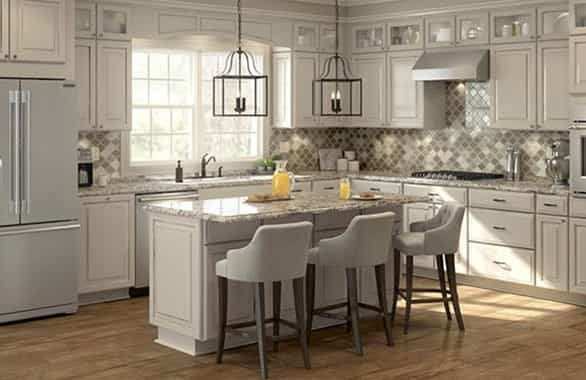
However, there’s such a wide variety of styles and elements that it can make decorating your kitchen difficult. With that in mind, we’ve gathered together the main modern kitchen trends 2025 in this article. Find out what they are and get inspired to decorate or remodel your kitchen!
Trend 1: Open-Concept Kitchens

In this section, we’ll learn more about this concept and give you tips on how to design your perfect luxury kitchen. So, keep reading and get inspired!
What is an open concept kitchen?
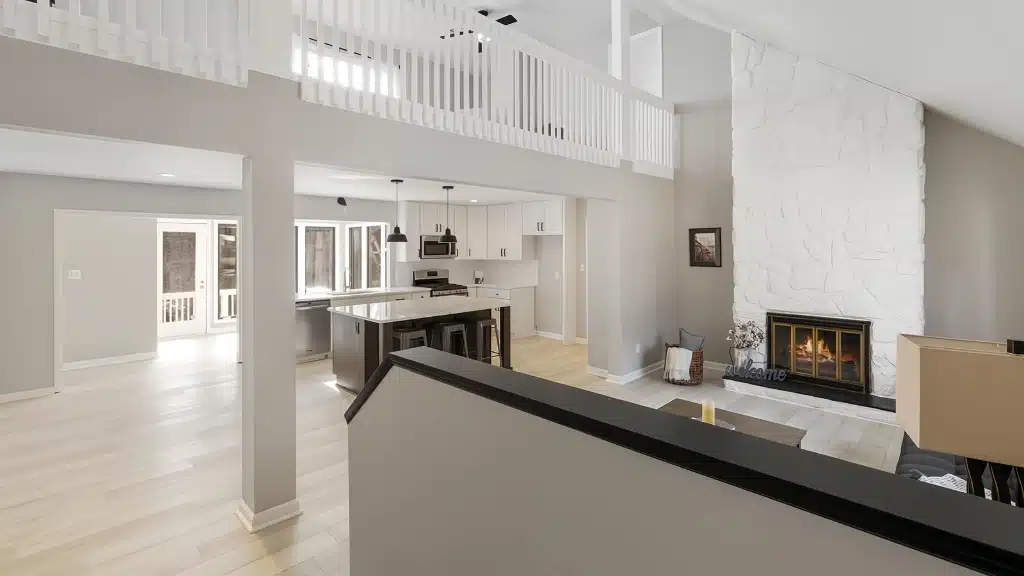
This kitchen concept integrates harmoniously with other areas of the house, such as the living room or dining room. The idea is to eliminate walls and visual barriers, promoting fluidity in the design. Instead of segmented spaces, the area is spacious, and each function of the house connects and complements one another.
What are the main types of kitchen layouts?
In general, there are three other main types: linear kitchen, L-shaped kitchen and island kitchen. A linear kitchen is practical for small spaces, with all the elements arranged on a single wall. An L-shaped kitchen utilizes both sides of the space, facilitating circulation. The island kitchen is widely used in modern projects and is usually integrated with other spaces, offering more space for preparation and socializing.
What are the benefits of an open concept kitchen?
An open-concept kitchen offers more than just aesthetics; it also provides practicality, enhancing the home experience. Let’s look at the main benefits.
Ample space and continuous flow
By removing physical barriers, the feeling of spaciousness is instantly increased. This design promotes a continuous flow between spaces. This way, household chores are carried out more easily and harmoniously. Moving around the house becomes more intuitive, especially on occasions with many guests, when foot traffic is more intense.
Integration of environments
The integration fostered by this type of kitchen facilitates social interaction. Imagine preparing a meal while chatting with friends and family in the living or dining room. With this setup, the host remains present, and gatherings are warmer and more connected.
More natural light
One of the advantages of open-concept kitchens is the abundance of natural light. With fewer walls and obstructions, daylight penetrates freely, illuminating the spaces, and creating a cozy and energizing environment.
Versatility in the use of space
With an open layout, the kitchen is more adaptable to different needs and situations. For parties, family gatherings, or even a romantic dinner, the flexibility of the space allows for multiple configurations, always adapting to the moment’s demands.
Better visibility and supervision
For families with children, the open concept is an added benefit. It allows the family to cook or perform other tasks in the kitchen while keeping an eye on the children playing in the living room, ensuring greater safety and convenience.
Want to learn more about kitchen layouts? Visit The Flooring & Remodeling Shop for a better understanding.
How to set up a fitted kitchen?
Start by identifying your needs and goals for the space: how many people will use the kitchen, what appliances you want to have, and how you want the space to function on a daily basis.
Next, work with a designer or architect specializing in high-end kitchens. They will help you optimize space, use the best materials, and ensure the kitchen is also functional.
Open-concept kitchen or traditional kitchen: which one to choose?
The decision between an integrated kitchen and a closed-plan kitchen should consider lifestyle, frequency of use, and, above all, the aesthetic impact on the entire property. An open-plan kitchen emphasizes spaciousness, connects spaces, and transforms the culinary experience into a moment of communal living.
In contrast, a traditional kitchen offers acoustic and olfactory insulation, ideal for those who prefer to keep each area clearly defined. In both cases, the design should prioritize excellent finishes and high-quality cabinetry that harmonizes with the rest of the home.
Open-Concept vs. Traditional Kitchen: Key Differences
| Feature | Open-Concept Kitchen | Traditional Kitchen |
|---|---|---|
| Space & Flow | Spacious, seamless connection between kitchen, dining & living areas. | Enclosed layout with defined, separate rooms. |
| Natural Light | Maximizes daylight with fewer walls and obstructions. | Less light due to enclosed walls. |
| Social Interaction | Great for entertaining and family time while cooking. | More private; cooking is separated from social areas. |
| Noise & Smell Control | Odors and sounds travel easily across spaces. | Better control of noise and cooking smells. |
| Flexibility & Design | Modern, adaptable, fits open-living trends. | Classic, timeless design with defined style. |
| Safety & Supervision | Easy to watch kids or interact with family. | Restricted view, less supervision across rooms. |
| Resale Value | Popular with buyers; adds modern appeal. | Appeals to those preferring tradition and privacy. |
How to Make an Open-Concept Kitchen Seem Less Noisy?
To reduce sound propagation, the choice of materials is crucial. Discreet acoustic coverings, dense fabrics in curtains and rugs, and furniture with sound-absorbing properties contribute to a quieter environment. Furthermore, equipment with noise reduction technology and high-performance hoods can also make a difference.
What Are the Best Appliances for Open-Concept Kitchens?
If you’re thinking about investing in an open-concept kitchen, look for low-noise appliances. Refrigerators with inverter compressors and dishwashers with reinforced soundproofing can help maintain the harmony of the space. The design of the appliances should also complement the cabinetry, ensuring a cohesive and polished aesthetic.
With this in mind, The Flooring & Remodeling Shop offers designs that integrate these elements in a timeless way, combining performance and beauty for those seeking comfort and functionality in their everyday lives.
Decorating Tips for an Open-Concept Kitchen
The open-concept kitchen is an architectural trend that transcends mere fashion. It represents the contemporary quest for integrated and sociable spaces. However, for your open-concept kitchen to truly shine, you need to pay attention to the decor. Here are some practical tips for optimizing the space’s style and functionality:
- Choose a cohesive color palette to unify kitchen and living spaces.
- Use area rugs to define zones without adding walls.
- Incorporate multifunctional furniture for flexibility.
- Add statement lighting fixtures to create focal points.
- Keep décor minimal to avoid clutter in the open space.
- Use open shelving or glass cabinets to showcase your style.
- Add plants or natural elements for warmth and freshness.
Trend 2: Modern Cabinet Designs

Features of Modern Kitchen Cabinet Design
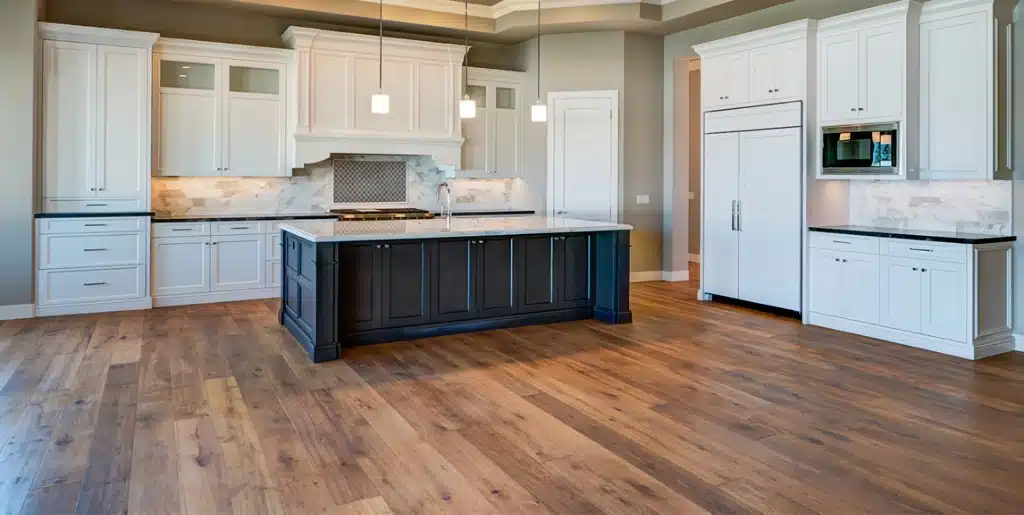
Clean lines, minimal ornamentation, multiple material options, and a focus on functionality characterize modern kitchen cabinets. They typically feature a streamlined, uncluttered look, achieved through simple hardware, flat surfaces, and an emphasis on geometric shapes.
One of the most striking features of modern kitchen cabinets is their frameless construction. This means there’s no faceplate on the front of the cabinet, resulting in a sleeker, more uniform look. The features include:
- Sleek, minimalist lines with flat-panel doors
- Handleless or soft-close hardware for a clean look
- High-gloss, matte, or textured finishes for style variety
- Smart storage solutions like pull-out racks and corner units
- Durable, moisture-resistant materials for longevity
- Integrated lighting inside or under cabinets
- Customizable options to match the overall kitchen design
Benefits of Choosing Modern Design Kitchen Cabinets
There are various benefits to choosing modern kitchen cabinets for your home. Some of these advantages include the following:
Enhanced Functionality
The modern style prioritizes function, ensuring ample storage space and accessibility. The frameless construction and fully overlaid doors mean you can make the most of every inch of your cabinet space.
Timeless Appeal
While trends come and go, the clean lines and minimal ornamentation of modern style ensure they remain timeless and always in style. This means your kitchen will maintain a fresh, contemporary look for years to come, even as other design trends evolve.
Easy Maintenance
The simplicity of modern kitchens makes them easy to clean and maintain. With fewer decorative elements and a streamlined look, you won’t have to worry about dust, dirt, and grime getting trapped in hard-to-reach places.
Design Versatility
Modern kitchen cabinets can be easily adapted to suit a variety of styles and tastes. Whether you prefer a more industrial look or a cozy design, you can customize these cabinets to fit your unique vision.
Trend 3: High-Quality Countertops
How to Choose the Best Material for Kitchen Countertops?
Before deciding which material is best for kitchen countertops, let’s consider the essential factors that should influence your decision. These are the same questions people ask when comparing the best kitchen countertop materials around the world.
Budget Considerations
Cost is one of the first factors to consider. Countertops can range from budget-friendly to luxurious options. For example, laminate countertops can cost as little as $8-$10 per square foot, while high-end materials like marble or granite can cost upwards of $80-$100 per square foot. If you’re on a tight budget, consider alternatives like butcher block or solid surface, which offer great value without breaking the bank.
Thinking about upgrading your kitchen countertops? Check out our premium countertop collections today!
Durability Needs
Are you an avid home cook or a busy parent with little time for maintenance? If you need a countertop that can withstand heavy use, granite or quartz are excellent choices. These materials are scratch- and heat-resistant, making them ideal for high-traffic kitchens.
On the other hand, materials like marble or butcher block, while beautiful, can show signs of wear more quickly and require more maintenance.
Maintenance Requirements
Some countertop materials require more maintenance than others. For example, marble requires periodic sealing to maintain its appearance and durability. If you’re looking for something low-maintenance, quartz and solid surface materials may be better. These options are non-porous, meaning they resist stains and are easy to clean with a simple cloth.
Aesthetic Preferences
The style of your kitchen plays a key role in your decision. Some materials, like marble, have a luxurious look that suits both traditional and modern kitchens. Others, like concrete or recycled glass, are better suited to industrial or eco-friendly designs. Consider how the countertop will complement your cabinets and flooring.
Environmental Impact
Sustainability is more important than ever, and the countertop industry has responded to this demand. Recycled materials, such as glass or paper countertops, are a great option if you’re looking to reduce your environmental footprint. These materials are often made from post-consumer waste and can be just as stylish as their more traditional counterparts.
Most Popular Countertop Materials in 2025
In 2025, when searching for the best kitchen countertop materials, some options continue to reign supreme, while others gain traction for their sustainability and innovative designs. This helps you select the best kitchen countertop materials based on your lifestyle and budget.
Quartz: Durable, Stylish, and Low-Maintenance
Quartz remains a top contender for the award for best kitchen countertop material, and for good reason. It’s designed to last and offers a wide range of colors and patterns. Because quartz is non-porous, it resists stains and bacteria, making it ideal for kitchen spaces. The advantages include:
- Extremely durable and resistant to chips and cracks
- Non-porous surface that resists stains, mold, and bacteria
- Low-maintenance with no sealing required and easy cleaning
- Wide variety of colors, patterns, and finishes available
- Consistent appearance compared to natural stone
- Heat and scratch resistant for everyday use
- Adds sleek, modern elegance to any kitchen design
Granite: A Timeless and Durable Classic
Granite is a timeless classic. Each slab is unique, giving your kitchen a distinctive look. Granite countertops are known for their beauty and durability. They can handle hot pans and heavy cutting without issue. However, granite needs to be sealed regularly to prevent stains and moisture damage. The advantages include:
- Unique natural patterns, with every slab being one of a kind
- High durability and resistance to scratches and daily wear
- Heat resistant and able to withstand hot pans and pots
- Adds luxury and long-term value to your kitchen
- Available in a wide range of natural colors and finishes
➤ Thinking about upgrading your granite kitchen space? Check out our premium granite collection today!
Marble: Elegant and Luxurious, but High-Maintenance
If you’re looking for elegance, marble is the right choice. With its veined pattern and luxurious finish, it’s no wonder marble is a favorite in high-end kitchens. However, marble is more porous than granite and can stain easily. It also requires regular sealing and maintenance, so it may not be the best option for busy kitchens.
- Luxurious and elegant appearance that enhances any kitchen design
- Unique veining patterns, with no two slabs alike
- Naturally cool surface, perfect for baking and pastry preparation
- Adds significant value to high-end or luxury homes
- Timeless appeal that never goes out of style
| Material | Pros | Cons |
|---|---|---|
| Quartz | Non-porous & resists stains/bacteria Wide range of colors/patterns Low maintenance |
Can be more expensive than other options Not as heat-resistant as natural stone |
| Granite | Unique natural patterns Very durable & scratch-resistant Heat-resistant |
Requires periodic sealing Heavy & needs strong cabinetry |
| Marble | Elegant & luxurious look Unique veining Cool surface (great for baking) |
Porous & stains easily Requires frequent sealing Softer—can scratch or chip |
| Butcher Block (Wood) | Warm, natural aesthetic Can be sanded & refinished More affordable option |
Susceptible to scratches & water damage Requires regular sealing/oiling |
| Solid Surface (e.g., Corian) | Seamless look Easy to repair scratches Wide color/design options |
Can scratch/burn easily Less heat-resistant than stone |
| Stainless Steel | Modern, professional look Heat & stain-resistant Hygienic & easy to clean |
Prone to scratches & dents Can show fingerprints easily |
| Laminate | Budget-friendly Huge variety of colors/designs Easy to install |
Less durable (scratches/chips) Not heat-resistant Difficult to repair |
How to Choose the Best Countertop Material for Your Kitchen?
Choosing the best countertop material depends on your cooking habits, kitchen style, and maintenance preferences. Here’s how you can choose:
- Evaluate your cooking habits: If you cook frequently, choose a durable, heat-resistant material like granite or quartz.
- Match the kitchen style: Make sure the material complements your cabinets and flooring.
- Consider maintenance: Opt for low-maintenance materials like quartz or solid surface if you don’t want to worry about regular maintenance.
- Evaluate your budget: Stay within your budget by considering materials that meet your needs.
Trend 4: Smart Kitchens & Technology
In an increasingly connected world, technology has permeated every aspect of our lives, transforming the way we live, work, and play, including in the culinary world. Therefore, understanding what a smart kitchen is has become essential for professionals and cooking enthusiasts alike.
Basically, the term refers to the use of smart devices, connected to the online, to facilitate and optimize culinary tasks. For professional kitchens, this type of technology can provide several benefits, such as:
- Remote control of appliances through smartphones or voice assistants;
- Energy efficiency with smart lighting, ovens, and refrigerators;
- Time-saving features like automated cooking programs and reminders;
- Enhanced safety with leak detectors, auto-shutoff devices, and smart sensors;
- Improved cooking precision with smart scales, thermometers, and guided recipes;
- Seamless integration with other smart home systems for convenience;
- Usage tracking and maintenance alerts to extend appliance lifespan.
How a Smart Kitchen Helps Productivity
In today’s world, we’re constantly challenged to multitask. In restaurants, cafes, and other food service establishments, this happens all the time. Fortunately, in the kitchen, it’s possible to optimize time through technology. Let’s see how this happens through smart kitchens.
- Automates routine tasks like preheating ovens or brewing coffee;
- Sends reminders and alerts to keep cooking on track;
- Streamlines meal prep with guided recipes and smart appliances;
- Reduces multitasking stress by integrating devices into one system;
- Saves time with voice commands and remote access;
- Helps maintain an organized workflow with smart storage solutions.
Trend 5: Statement Flooring
It’s clear that there’s a wide variety of kitchen flooring options available today. On the one hand, this is a good thing, as it gives you more options when it comes to remodeling this room. However, it also increases the complexity of choosing the right flooring. That’s why we at The Flooring And Remodeling Shop want to help you choose. Pay attention.
Budget and Surface Area
We are sure you have a budget, even if only roughly, for your kitchen flooring. Knowing the square meters of tiles will help you determine the maximum price per square meter of tiles you can afford. This will significantly limit the options available and simplify the process.
Durability
The kitchen, after the bathroom, is the area of any home where most accidents occur. You wouldn’t want to accidentally drop a glass jar and break a tile. Therefore, choose materials that are durable. This characteristic will also help extend their lifespan over time.
Safety
When cooking or washing dishes, water can spill onto the floor. If you don’t buy a kitchen floor with a non-slip coating, the risk of slipping is very high. Remember that the kitchen is full of furniture, and in addition to the impact of a fall, you could bump into it and suffer a serious injury.
Ease of Cleaning
Similarly, kitchen floors stain easily. After all, it’s impossible not to drop things while cooking or doing any other household chores. Therefore, choose a non-porous flooring that won’t absorb liquids and dirt. This way, it will take much less time to get it sparkling clean.
Once you’ve defined these above aspects, the range of possibilities at your disposal will have narrowed considerably. So, now it’s time to start thinking about the tile style that best fits the rest of your kitchen design.
Kitchen Flooring Designs and Materials
As we just mentioned, it’s time to start thinking about your kitchen flooring design. The choice of materials plays a fundamental role, as it largely defines the tile’s aesthetic. These are the conventional options available.
Natural Stone Flooring for Kitchens
Natural stones certainly look great if you want to furnish your kitchen in a classic style. The most commonly used materials are granite, slate, and marble. However, they require a lot of care, as they are quite porous and easily absorb dirt. They also need to be polished from time to time to restore their original appearance.
Natural Stone Flooring Pros & Cons
| Advantages | Disadvantages |
|---|---|
|
✓ Timeless and elegant appearance ✓ Highly durable and long-lasting ✓ Heat-resistant, perfect for busy kitchens ✓ Unique patterns and colors — every stone is different ✓ Boosts property value with a premium look ✓ Easy to clean with proper sealing |
✕ Requires regular sealing to prevent stains ✕ Can be cold and hard underfoot ✕ Higher cost compared to other flooring options ✕ Installation is labor-intensive and expensive ✕ May be slippery if not textured or treated |
Hardwood flooring for kitchens
A very interesting alternative if you’re a fan of the rustic style. Why? Because there’s no other material that offers a warmer, more welcoming feel to this room. However, like natural stone, wood requires a lot of maintenance. You should take special care to ensure it doesn’t absorb moisture and ensure to remove stains promptly, so it doesn’t absorb them and leave marks.
Hardwood Flooring for Kitchens Pros & Cons
| Advantages | Disadvantages |
|---|---|
|
✓ Warm, natural, and timeless aesthetic ✓ Can be refinished multiple times to restore appearance ✓ Adds significant value to the home ✓ Comfortable underfoot compared to stone or tile ✓ Wide variety of wood types, stains, and finishes |
✕ Susceptible to water damage, warping, and stains ✕ Requires regular maintenance and sealing ✕ Not as durable in high-moisture areas ✕ Higher cost compared to laminate or vinyl ✕ Can scratch and dent from heavy use |
Tile Flooring for Kitchens
It’s the best option if you don’t like grout and don’t want to worry about removing the previous flooring, as you can install it over the existing one. It is highly moisture-resistant and has a strong non-slip property, although it’s expensive.
Tile Flooring for Kitchens: Pros & Cons
| Advantages | Disadvantages |
|---|---|
|
✓ Extremely durable and long-lasting ✓ Water, stain, and heat resistant ✓ Wide range of styles, colors, and patterns ✓ Easy to clean and maintain ✓ Ideal for high-traffic kitchen areas ✓ Affordable options available (ceramic & porcelain) |
✕ Can feel cold and hard underfoot ✕ Grout lines may stain and require regular cleaning ✕ May be slippery when wet unless textured ✕ Installation can be labor-intensive ✕ Hard surface can be uncomfortable for long standing periods |
SPC Vinyl Flooring
SPC vinyl flooring for kitchens has become increasingly popular in recent years in McKinney, TX. It’s very easy to install (anyone can do it at home with a cutter and a little glue) and is stain-resistant. However, it has a short lifespan, typically lasting no longer than 6-8 years.
SPC Vinyl Flooring for Kitchens: Pros & Cons
| Advantages | Disadvantages |
|---|---|
|
✓ 100% waterproof — ideal for kitchens ✓ Extremely durable and resistant to scratches and dents ✓ Comfortable underfoot with added sound absorption ✓ Easy to install with click-lock system ✓ Low maintenance — simple cleaning ✓ Wide range of designs, including realistic wood and stone looks ✓ More affordable than natural stone or hardwood |
✕ Can feel less premium compared to natural stone or hardwood ✕ Limited refinishing options — must be replaced if damaged ✕ Direct sunlight may cause fading over time ✕ Quality varies depending on manufacturer ✕ May not add as much resale value as hardwood or stone |
Comparison Table of the Best Kitchen Flooring Options
See which kitchen flooring option best fits your needs at a glance.
| Flooring Type | Best For | Not Ideal For | Overall Rating |
|---|---|---|---|
| Natural Stone | Luxury kitchens, durability, high resale value | Homeowners on a budget, low-maintenance seekers | ★★★★★ |
| Hardwood | Warm, timeless look, refinishing flexibility | High-moisture kitchens, heavy water exposure | ★★★★☆ |
| Tile (Ceramic/Porcelain) | High-traffic, waterproof, low-maintenance | Comfort underfoot, grout cleaning required | ★★★★☆ |
| SPC Vinyl | Budget-friendly, waterproof, easy DIY install | Luxury or premium resale upgrades | ★★★★☆ |
| Laminate | Affordable, stylish wood look | Moisture-prone kitchens, long-term durability | ★★★☆☆ |
Ready to Upgrade Your Kitchen Flooring?
Whether you prefer the timeless look of hardwood, the sustainability of bamboo, or the durability of tile, The Flooring and Remodeling Shop can help you choose the right flooring for your kitchen. Get expert guidance and professional installation in Plano, Frisco, McKinney, and Allen, TX.
Call us today at (972) 746-1575 or schedule a free flooring consultation.
Verdict:
If you want luxury & resale value → Go with Natural Stone or Hardwood.
If you want low-maintenance & durability → Tile or SPC Vinyl
If you want a budget-friendly wood style → Laminate works, but it’s less durable in kitchens.
Trend 6: Bold Backsplashes & Accents
In the past, the kitchen backsplash simply fulfilled its function of protecting the wall from splashes, stains, and damage. But today’s kitchen design gives the backsplash the attention it deserves. Now you have more options for backsplash design, including different materials, styles, colors, and textures. You may even find yourself with more backsplash choices than countertop options.
The final design of your backsplash is one of the most important remodeling or construction decisions you will need to make. After all, it is something you will see and use every time you are cooking or washing dishes. Below are some of the trendiest kitchen backsplash options available on the market.
Glass Tile Backsplash
The characteristic transparency of glass makes it an easy choice for backsplash tiles. With its modern appeal combined with endless color variations, you can never go wrong with glass tiles.
Another feature of this material is its ability to reflect light, creating the illusion of more space in the kitchen. Glass backsplashes are also easy to clean. You can wipe away splashes and dirt with just a few drops of soap and water.
Another advantage of this type of kitchen backsplash is that glass does not absorb moisture, making it resistant to mold and mildew. From an aesthetic standpoint, a glass backsplash can give your kitchen a brighter, more modern look. It is a great addition to contemporary kitchen designs.
Subway Tile Backsplash
Whether you’re concerned about limited kitchen space or have a specific design aesthetic, subway tile is a solid addition to your kitchen layout. This design has always been a popular choice for many homeowners and for good reason.
One of its main advantages is affordability. Subway tiles are also easy to maintain, and you can simply wipe away common stains and spills.
Brick Backsplash
If you’re considering an exposed brick wall in your kitchen, you can use it to add character and visual interest to the space. Step away from the traditional stone tile kitchen backsplash trend and embrace the rustic appeal of exposed brick.
Mosaic Backsplash
Mosaic is a popular choice not only because of its variety of styles but also because of the wide range of colors available. Mosaic tiles consist of smaller tiles arranged in a specific pattern and typically attached to a mesh backing for easier installation.
Stone Backsplash
Natural stone backsplashes are a popular option for kitchen renovations. A stone kitchen backsplash can provide a distinctive and sophisticated appearance. These backsplashes offer a classic look, while the seamless appearance of large stone slabs works particularly well with contemporary styles. Stone backsplashes can be found in modern and transitional kitchens where homeowners want to create a premium, high-end appearance.
Steps to Choosing the Best Kitchen Backsplash
From traditional metal backsplash tiles to modern glass and stone surfaces, kitchen backsplashes have evolved in many directions. The wide range of materials, finishes, designs, colors, textures, and sizes can make the decision overwhelming.
It is always better to narrow down your choices rather than get overwhelmed by the available options. Good places to start include your personal preferences for price, design, location, and maintenance. In the end, it is your home and your choice.
- Define your style: Decide whether you want a modern, classic, or eclectic look.
- Set a budget: Know how much you’re willing to spend before exploring options.
- Choose the right material: Options include ceramic tile, glass, stone, metal, or even SPC panels.
- Match with countertops and cabinets: Ensure the backsplash complements your existing kitchen design.
- Consider durability: Pick a material that resists heat, moisture, and stains.
- Think about maintenance: Choose a surface that’s easy to clean and doesn’t require constant upkeep.
- Play with patterns and colors: Use textures, mosaics, or bold colors to add personality.
- Check lighting effects: See how natural and artificial light interacts with your backsplash choice.
- Get samples: Place sample tiles in your kitchen to test how they look in real conditions.
- Hire professionals if needed: Proper installation ensures long-lasting results.
Trend 7: Energy Efficiency & Sustainability
In recent years, many homeowners have begun to pay more attention to their carbon footprint. With the effects of climate change impossible to ignore, more families are taking steps to reduce unnecessary energy consumption. The kitchen, as a central place for cooking and family gatherings, can consume a significant amount of resources and energy.
So if you’re planning a kitchen renovation, it’s worth making energy efficiency a key aspect of your project. If you’re looking to create a greener kitchen, the following tips can help.
Invest in Energy-Efficient Appliances
The kitchen is where many important appliances are located. From refrigerators and dishwashers to ovens and small appliances, these devices are essential in any modern home. It’s no surprise that they can have a significant impact on your monthly energy bills. To reduce your household’s energy consumption and keep energy costs under control, consider purchasing energy-efficient appliances.
Install Low-Flow Faucets
The kitchen can also be a major source of unnecessary water consumption. When washing dishes, washing hands, and performing other everyday tasks, many homeowners unintentionally waste water.
Low-flow faucets can help reduce this waste. These fixtures are designed to use less water while maintaining adequate water pressure, helping lower household water consumption and potentially reducing water bills. Whether you’re replacing an outdated faucet or planning a complete kitchen renovation, water-efficient fixtures are a practical upgrade.
Pro Tips: Energy Efficiency & Sustainability
- ✓ Choose energy-efficient appliances: Look for ENERGY STAR-rated refrigerators, dishwashers, and ovens.
- ✓ Install LED lighting: Reduce energy consumption and extend bulb lifespan.
- ✓ Use water-saving fixtures: Opt for low-flow faucets to reduce unnecessary water consumption.
- ✓ Incorporate sustainable materials: Consider eco-friendly cabinetry, recycled glass countertops, or bamboo flooring.
- ✓ Maximize natural light: Use windows, skylights, or open layouts to reduce reliance on artificial lighting.
- ✓ Upgrade insulation: Proper wall and floor insulation can help maintain indoor temperatures and reduce energy use.
- ✓ Integrate smart technology: Use smart thermostats, lighting controls, and appliances to monitor and optimize energy use.
- ✓ Choose eco-friendly paints and finishes: Select low-VOC paints and sealants to support better indoor air quality.
- ✓ Plan for recycling and composting: Include designated storage areas for waste separation and compost bins.
Eco-Friendly Kitchen Materials: Pros & Cons Comparison
| Material | Advantages | Disadvantages |
|---|---|---|
| Bamboo | Rapidly renewable & highly sustainable Durable and lightweight Stylish, modern look Affordable compared to hardwood |
Can scratch or dent more easily Requires sealing for water resistance Quality varies by supplier |
| Recycled Glass Countertops | Unique, colorful, and modern aesthetic Made from recycled materials Non-porous and easy to clean Heat and stain resistant |
Can chip or crack under heavy impact Higher cost than some traditional options Limited suppliers |
| Reclaimed Wood | Gives a rustic, warm, and unique character Reduces demand for new lumber Strong and durable with proper treatment Eco-conscious option with history |
Requires refinishing or treatment Susceptible to moisture and pests Can be expensive depending on rarity |
| Recycled Stone/Composite | Durable and long-lasting Attractive, premium look Heat and scratch resistant Uses waste stone or composite materials |
Heavy, requiring strong support Higher installation cost Limited availability in some areas |
| Stainless Steel (Recycled Content) | Extremely durable and hygienic 100% recyclable at end of life Resistant to heat and stains Ideal for modern, industrial-style kitchens |
Can scratch or dent easily Shows fingerprints and smudges Noisy compared to other surfaces |
Tips for a Successful Kitchen Remodel
Remodeling your kitchen has everything you need to transform the heart of your home into a more functional, cheerful, and aesthetically pleasing space. Whether you want to implement minor or major changes, you need to implement strategic planning that includes careful budgeting.
In this section, we present a practical guide to help you undertake renovations in your kitchen, with a special emphasis on the option of taking out a construction loan to make your project more feasible.
Assess Your Goals and Needs
Start by assessing the layout of your kitchen, the available storage space, and the functionality of each area. Identify what’s working and what needs improvement, and consider how useful your kitchen is to you: do you cook frequently, entertain regularly, or do you simply need more space to store utensils and perishables?
➽ The answers to these questions will help you determine the scope of the remodeling to undertake.
Set a Realistic Budget
Setting a budget is crucial – determine how much you can spend and what changes are a priority. If this step is a cause for concern, consider applying for a construction loan to finance the renovation. This way, you’ll have the necessary amount to cover the expense upfront, with reimbursement due later according to the term defined in the contract.
Carefully Plan the Layout of the Space
For your kitchen to be fully functional, it needs to be thought through carefully: there’s the classic work triangle, in which the stove, dishwasher, and refrigerator are distributed triangularly to make the space more efficient.
Alternatively, you can incorporate a central island, which allows you to create additional storage and cooking space; in this case, the kitchen must, of course, be sufficiently spacious.
Select Appropriate Materials
Choose raw materials that provide durability and a timeless look. For countertops, options like granite, quartz, and other solid surfaces are the most popular choices.
When selecting cabinets, consider the quality of the hinges and drawer mechanisms. Don’t forget to choose surfaces that are easy to clean, particularly behind the stove and for the entire floor.
Update Appliances
Modern, efficient appliances not only add aesthetic appeal to kitchens, but also help you save on energy consumption. Therefore, look for devices with a good energy efficiency rating and easy-to-use features. Built-in appliances add even more elegance to your kitchen.
Lighting and Color Scheme
Good lighting in the kitchen is essential; therefore, combine different types of lighting depending on the natural visibility of the space and the intended use of each area. For example, having lighting under cabinets allows you to create a great atmosphere while also adding more functionality to the space.
Consider Using the DIY Method Whenever Possible
To save money on your remodeling bill, consider which aspects you can tackle yourself – simpler tasks, like painting or replacing cabinet door handles, can be done without professional help.
However, for more complex tasks such as electrification or plumbing, we strongly recommend that you let professionals handle the matter.
Hiring Professionals
Not surprisingly, if you’re planning on undertaking large-scale renovations, it’s more beneficial to hire a designer or contractor; these professionals can help you realize your vision, ensuring the project stays within the budget you initially set and is completed on time.
Just make sure you request more than one quote and look for references that attest to the quality and professionalism of the companies you’re considering before making a decision.
Sustainability
Adopt an eco-friendly approach when implementing your kitchen renovation – opt for efficient appliances, sustainable materials, and consider reducing waste as you go.
Financing of Remodeling
If your dream kitchen exceeds your savings, the most practical solution is a construction loan; this loan allows you to finance your project immediately, allowing you to repay it later over time.
⟶ To conclude: Remodeling your kitchen is a substantial undertaking that can contribute to increasing the property value of your home and improving your living conditions. Remember that a successful remodel balances aesthetic vision with convenience and budgetary considerations.
Conclusion:
To summarize everything we’ve told you in this article, it’s important to consider the size of the kitchen and the amount of space available when designing the distribution of the elements.
Keep in mind that the design of a small kitchen is different from that of a larger one. Using vertical storage solutions maximizes space in the former, while in the latter, you can incorporate an island to separate work areas and increase efficiency.
We hope this comprehensive guide helps you get started on your kitchen remodeling project in the coming weeks! You can be sure you won’t regret it, as these changes will completely transform your space and you’ll be able to enjoy it for a long time.
FAQs
What are the top kitchen remodeling trends in McKinney for 2025?
In McKinney, homeowners are embracing open-concept kitchens, smart appliances, quartz and granite countertops, statement backsplashes, and durable SPC vinyl or hardwood flooring. At The Flooring and Remodeling Shop in McKinney, we help bring these trends to life with expert design and installation.
How can The Flooring and Remodeling Shop in McKinney help with kitchen remodeling?
We provide full-service kitchen remodeling in McKinney, including custom layouts, high-quality countertops, cabinetry, flooring, lighting, and appliance installation. Our team ensures your new kitchen combines style, functionality, and long-term durability.
What’s the average cost of a kitchen remodel in McKinney?
The cost of kitchen remodeling in McKinney typically ranges from $8,000 for basic updates to $180,000 for luxury renovations. The Flooring and Remodeling Shop in McKinney offers tailored solutions to meet your budget while delivering a modern and stylish kitchen.
Which kitchen design styles are most popular in McKinney right now?
McKinney homeowners are choosing contemporary, farmhouse, transitional, and luxury kitchen designs. Each style emphasizes functional layouts, high-quality materials, and modern aesthetics. We at The Flooring and Remodeling Shop in McKinney can help customize any of these styles to your home.
How long does a kitchen remodel take in McKinney?
Most kitchen remodels in McKinney take between 4 to 12 weeks, depending on the project scope. Our team at The Flooring and Remodeling Shop in McKinney manages everything from planning to installation to ensure a smooth and timely process.
Are smart kitchens a trend in McKinney kitchen remodeling?
Absolutely! Smart appliances, touchless faucets, and automated lighting are among the hottest trends in McKinney kitchens. Our remodeling services include smart kitchen integration to make your home more convenient and energy-efficient.
How do I choose the right flooring for my kitchen remodel in McKinney?
Flooring should balance style, durability, and ease of maintenance. Popular options in McKinney include SPC vinyl, hardwood, and tile. At The Flooring and Remodeling Shop in McKinney, we help you select the best flooring to match your design and lifestyle.
Can The Flooring and Remodeling Shop in McKinney handle a full kitchen renovation?
Yes! From initial design consultation to final installation, we provide complete kitchen renovation services in McKinney, including cabinets, countertops, flooring, lighting, and appliances.
How can I make my kitchen more functional during remodeling in McKinney?
Focus on smart storage solutions, open layouts, and efficient work triangles. The Flooring and Remodeling Shop in McKinney specializes in creating kitchens that maximize space and improve everyday usability.
What materials are trending for countertops and backsplashes in McKinney kitchens?
Quartz, granite, marble, and unique tiles are highly popular in McKinney kitchen remodeling. Our team at The Flooring and Remodeling Shop in McKinney can guide you to the best materials that suit your style and budget.